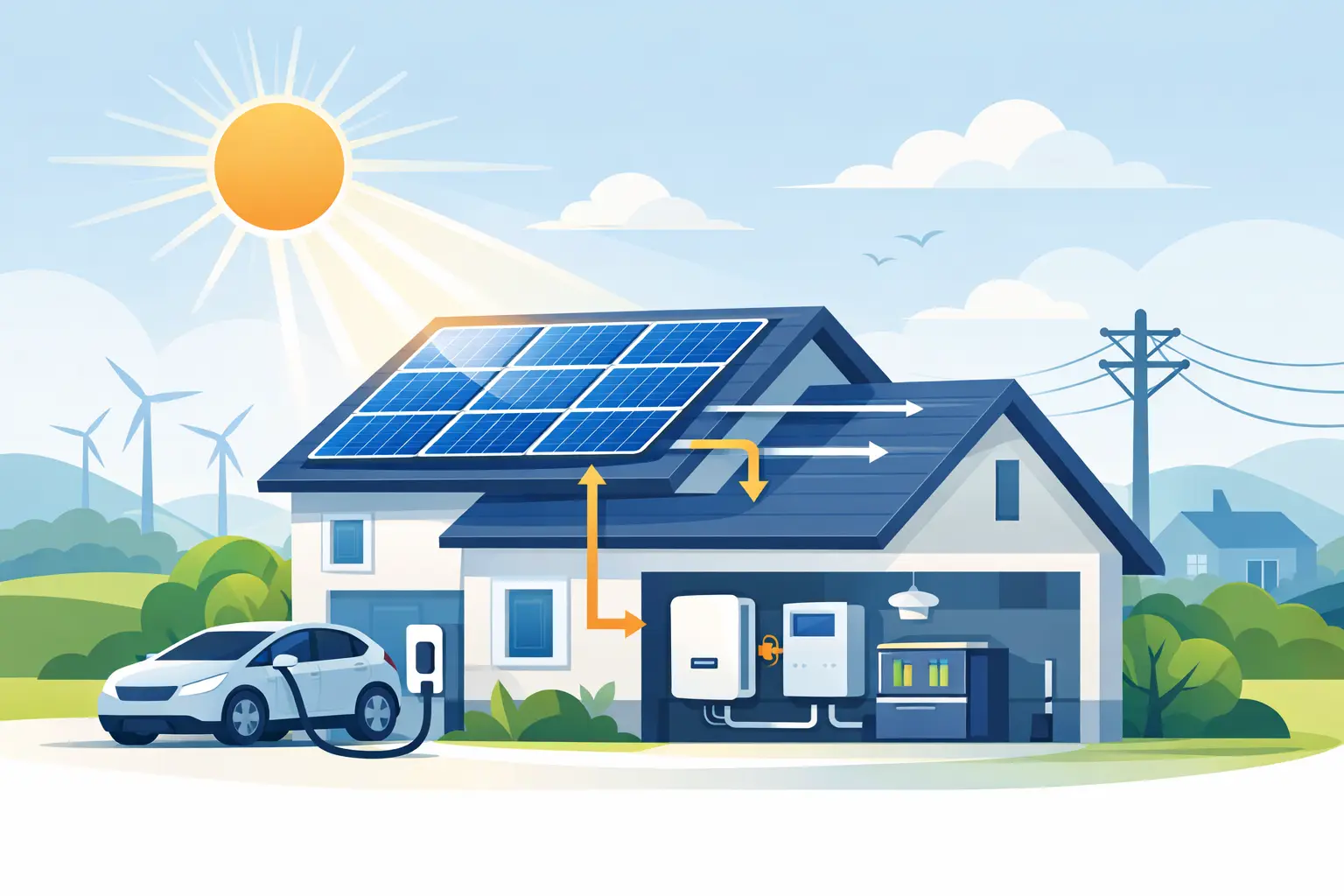
Your electric meter is the point where a solar system becomes real. On a bright afternoon, your roof may produce more electricity than your home needs. At night, production stops, but your home still needs power. How do residential solar power systems work across those changing conditions? They generate electricity from sunlight, convert it into usable household power, and coordinate with the utility grid - and sometimes a battery - to keep your home supplied.
For most homeowners, solar is not about going completely off-grid. It is a practical way to offset part or all of the electricity you would otherwise buy from your utility. The results depend on your roof, local electricity rates, utility rules, energy use, system design, and financing terms.
How Residential Solar Power Systems Work at Home
A typical grid-connected system has solar panels, mounting equipment, wiring, an inverter, electrical safety equipment, and a utility-approved meter. Each part has a specific job, and the system works automatically once it is installed and activated.
Solar panels contain photovoltaic cells that respond to sunlight. When light reaches those cells, it creates direct current, or DC, electricity. Your home appliances and the utility grid use alternating current, or AC, electricity, so the raw solar output needs to be converted before it can serve your home.
That conversion happens through an inverter. Depending on the design, one central inverter may manage the entire array, or smaller microinverters may be installed behind individual panels. A third option, power optimizers paired with a central inverter, conditions the output from each panel before sending it to the inverter.
Once converted to AC power, solar electricity feeds into your home's electrical panel. Your home uses that solar power first when appliances, lights, air conditioning, or electronics are running. If the panels produce more than the house needs at that moment, the extra electricity may flow to the utility grid or charge a battery, if your system includes one.
What Happens When the Sun Is Not Shining
Solar production changes throughout the day. It begins after sunrise, rises toward midday, and declines in the afternoon. Clouds, shade, snow coverage, panel orientation, and seasonal daylight also affect output. Panels still produce some electricity on cloudy days, but usually less than they do in direct sun.
At night, standard rooftop panels do not generate electricity. A grid-connected home then draws power from the utility, just as it did before solar. This is why a solar installation does not automatically make a home independent from the grid.
Many utilities offer a billing arrangement often called net metering, though the details vary widely by state and utility. Under favorable rules, surplus solar production earns a credit that helps offset electricity purchased later. In other areas, exported power is credited at a lower rate than the retail price of electricity. That difference can materially affect the value of a solar system and whether a battery makes financial sense.
Before signing an installation agreement, ask how your utility credits exported solar, whether rates vary by time of day, and whether there are fixed monthly charges solar cannot offset. A production estimate without these billing details is incomplete.
The Inverter Is More Than a Converter
The inverter is the system's control center. It converts DC electricity to AC electricity, monitors performance, and protects the system from unsafe operating conditions. Most modern systems also send production data to an app or online portal so homeowners can see daily, monthly, and lifetime generation.
Inverters also support a critical safety function called anti-islanding. If the utility grid goes down, a standard grid-tied solar system shuts off automatically. That prevents solar electricity from feeding power into utility lines while crews may be working on them.
This surprises some homeowners. Solar panels alone generally do not keep your home powered during an outage. Backup capability requires the right inverter configuration, a battery or other approved backup equipment, and a dedicated backup electrical panel for selected circuits. The exact setup depends on how much of the home you want to power and for how long.
Solar Batteries Store Power, but They Are Not Required
A battery stores electricity generated by your solar panels or, in some cases, electricity purchased from the grid during lower-cost periods. When solar output falls or an outage occurs, the battery can supply stored energy to the circuits included in your backup plan.
Batteries can be valuable for homeowners who experience frequent outages, face time-of-use utility rates, or receive low compensation for excess solar sent to the grid. They also provide more control over when your solar energy is used. But they add substantial cost, and they are not necessary for every solar project.
A battery should be sized around a clear goal. Keeping a refrigerator, internet equipment, lights, and a few outlets running is very different from backing up central air conditioning, electric heat, a pool pump, and every circuit in the house. A professional design should identify essential loads, expected backup duration, and the limitations homeowners should expect during extended cloudy weather or a multi-day outage.
System Size Starts With Your Electricity Use
Solar systems are commonly measured in kilowatts, or kW. A larger number does not automatically mean a better system. The appropriate size is based first on your annual electricity consumption, typically shown on 12 months of utility bills.
A household using 12,000 kilowatt-hours per year needs a different design than one using 24,000. Future changes matter too. An electric vehicle, heat pump, home addition, electric water heater, or growing family can increase electricity use. On the other hand, improving insulation or replacing an older HVAC system may lower it.
Roof characteristics shape the design. South-facing roofs often provide strong annual production in much of the United States, but east- and west-facing arrays can also be effective, particularly where afternoon electricity is more expensive. Shade from trees, chimneys, vents, and neighboring structures may reduce production. Microinverters or optimizers can be useful where partial shading affects only some panels, although they may cost more than a simple string-inverter design.
The goal is not necessarily to cover 100% of every future kilowatt-hour. Local interconnection rules, roof space, budget, export compensation, and your own plans for the property can all point to a smaller or larger system.
From Roof Assessment to Permission to Operate
The installation process begins with a site assessment. An installer reviews roof age and condition, usable roof area, shading, electrical equipment, structural considerations, and local code requirements. If a roof is near the end of its life, replacing it before installing panels can avoid the expense of removing and reinstalling the array later.
After the system is designed, the project usually moves through permitting, utility interconnection approval, installation, inspection, and final utility authorization. The utility's final approval is often called permission to operate. Until that step is complete, the system may be installed but not yet allowed to export electricity to the grid.
Timelines vary by jurisdiction and utility. The physical installation may take only a day or two, while permits, inspections, and interconnection can take longer. Clear paperwork and accurate system design help prevent avoidable delays.
What Solar Can and Cannot Do for Your Bill
Solar reduces the amount of electricity you purchase from the utility. It does not usually eliminate every line item on the bill. Many utilities retain connection fees, minimum charges, taxes, or charges tied to electricity used beyond what the system offsets.
Your savings also depend on when you use electricity. If your home produces heavily at midday but uses most power after sunset, a battery or favorable export-credit policy becomes more relevant. If your utility has high daytime rates, daytime production may be especially valuable. There is no single savings percentage that applies to every home.
Financing changes the picture as well. Cash purchases, loans, leases, and power purchase agreements have different ownership, tax-credit, payment, transfer, and long-term savings implications. Compare the total cost, escalation clauses, expected production, equipment warranties, and assumptions used in each proposal - not just the monthly payment.
A Better Way to Evaluate a Solar Proposal
A solid proposal should show the system size, panel count, inverter type, estimated first-year production, expected degradation over time, and assumptions behind projected savings. It should also explain whether the estimate accounts for shade, roof orientation, utility rates, and local net-metering or export rules.
Ask who owns the equipment, what warranties apply to the panels, inverter, roof penetrations, workmanship, and battery, and who will handle permits and utility paperwork. Confirm whether the price includes electrical upgrades if your main service panel needs work. These details are where two apparently similar quotes can become meaningfully different.
Residential solar works best when the equipment, utility plan, and household goals are designed together. Start with your actual electric bills and your plans for the home, then use those facts to evaluate a system that fits rather than simply filling every available section of roof.